A Cheap Used EV Is a Battery Bet — How Tennessee Buyers Can Check the Pack Before Signing
Photo: Dmitry Ivanov.., CC BY-SA 4.0, via Wikimedia Commons
Used electric vehicles are moving from novelty to normal on Tennessee lots. That is good news for shoppers who want to skip the gas station. It also means more people are about to make a very expensive bet on a battery pack they cannot see.
The battery is the whole game in a used EV. A $15,000 hatchback with a worn pack can cost more to own than a $21,000 version with a healthy one. In 2026, the smart move is not to avoid used EVs. It is to demand better proof before you sign.
Why a low price can be a battery warning
EV battery packs degrade over time and use. That is normal. What is not normal is a price that is thousands below similar cars with no explanation. Sometimes it is a motivated seller. Sometimes it is a pack that has lived a hard life in a hot climate, been DC fast-charged constantly, or already lost a big chunk of its usable capacity.
Tennessee summers are not gentle. Heat is hard on batteries, and a car that spent years parked in the sun or quick-charged on every road trip may be further along in its life than the odometer suggests. A low price is not proof of a problem, but it is a reason to slow down and ask better questions.
Ask for state of health, not state of charge
State of charge is how full the battery is right now. State of health is how much capacity it has left compared with new. Those are very different numbers. A car can show 100 percent charged and still have a pack that has lost a lot of usable range.
Ask the seller for a battery health report from a franchised dealer or a reputable EV diagnostic service. Look for state of health, usable capacity, and any recorded battery-related repairs. If the seller cannot provide one, ask whether you can pay for a pre-purchase inspection at a shop that knows EVs. If the answer is no, keep walking.
Be careful with screenshots and printouts that show only a happy number with no context. You want the full report, not a cropped photo. A good report should show the VIN and the date of the test.
Do a range test that matches your life
A test drive around the block tells you almost nothing about battery health. Ask to start with a known charge level and drive a mixed route for 20 to 30 minutes. Include some highway speed, some stop-and-go, and if the weather is cold, leave the climate control on. Watch how quickly the range estimate drops compared with the actual miles you drive.
Do not expect the dashboard range to match the EPA number exactly. It will not. What you are looking for is a big gap between what the car promises and what it delivers. If the range estimate falls apart on a mild Tennessee day, that is a red flag.
Also check the charging screen for any error messages, reduced-power warnings, or battery temperature warnings. Ask the seller to let you plug the car in. A normal AC charge session should start without drama.
Check the charge port and the software
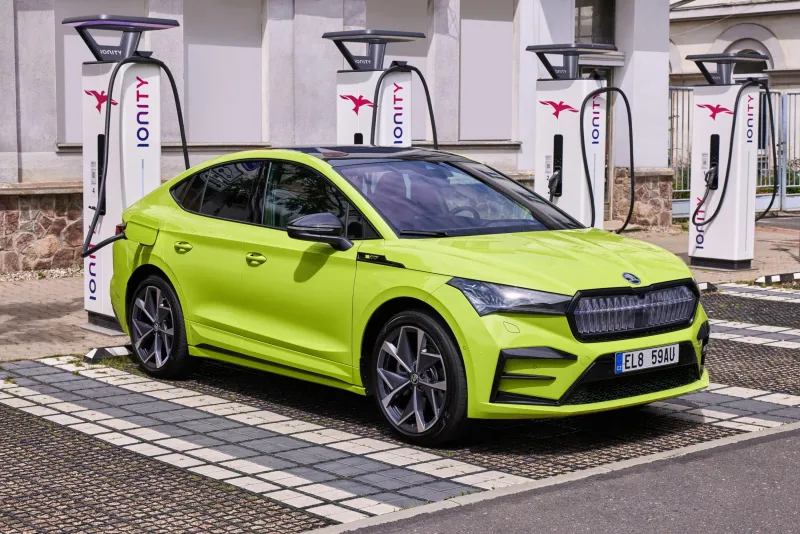
Open the charge port and look at the pins. Corrosion, burn marks, a loose latch, or a port door that does not seal are all reasons to ask more questions. If the car supports DC fast charging, ask to test it at a public charger if the seller will allow it. A car that refuses to fast-charge can still be a fine commuter, but you should know that before you buy.
Then check the software. Ask whether the car has any open recalls, whether the infotainment and battery management software are up to date, and whether the manufacturer's battery warranty transfers to you. Most EV battery warranties run for eight years or 100,000 miles, but the terms vary. Read the fine print on transferability, capacity-loss coverage, and what counts as normal degradation.
Questions to ask before you sign
Ask how the car was charged. Frequent DC fast charging is not automatically a dealbreaker, but it matters. Ask whether the car was ever in a major accident, especially one that damaged the underbody or battery tray. Ask if the battery has ever been replaced or repaired, and who did the work. Ask for the full service history, not just the oil-change-style records that do not apply here.
Ask what a replacement pack would cost. You may never need one, but the number tells you how much risk you are carrying. If the replacement cost is close to the value of the car, you need a very healthy battery report to feel comfortable.
The Tennessee reality check
Used EVs can be a great fit for Tennessee drivers who mostly commute locally and charge at home. They can be a worse fit for someone who regularly drives long rural routes with limited charging. Be honest about your own routine before you fall for a quiet cabin and a low price.
A cheap used EV is not a scam by default. It is a battery bet. Get the health report, do the range test, inspect the port and software, and ask the boring questions. The right car will survive the scrutiny. The wrong one will show you why it was priced to move.