Skipping Oil Changes Is Costing Tennessee Drivers Way More Than They Think
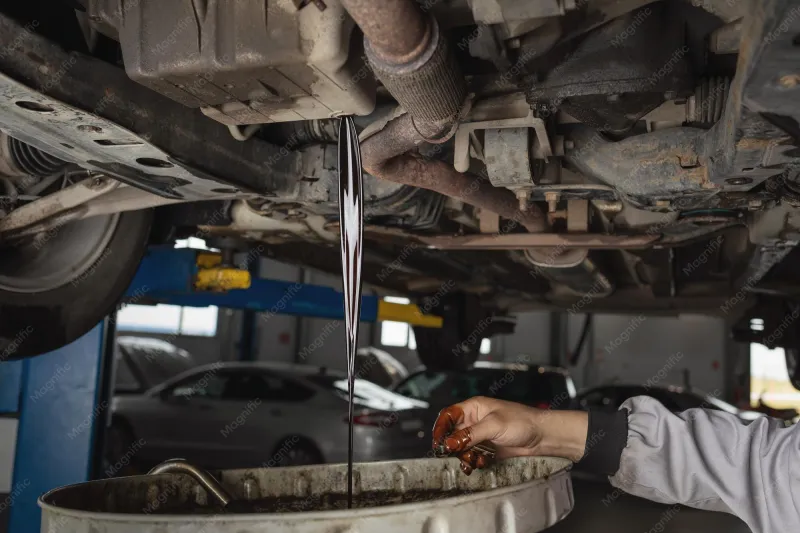
Photo: mechanic draining old dark engine oil from car during oil change, via img.freepik.com
Let's be honest — life gets busy. Between work, the kids, and everything else pulling at your schedule, it's easy to glance at that little sticker on your windshield, see you're 2,000 miles past your oil change, and think, "I'll get to it next week." Next week turns into next month. Next month turns into, well, you know how this goes.
Here at AB Auto TN, we see the aftermath of that thinking pretty regularly. And we're not saying this to guilt-trip anyone. We're saying it because the numbers are genuinely eye-opening — and once you see them laid out, a routine oil change starts looking like one of the smartest investments you can make.
What Oil Actually Does Inside Your Engine
Before we get into the dollar figures, it helps to understand what's at stake mechanically. Engine oil isn't just a lubricant — it's doing several jobs at once. It reduces friction between moving metal parts, helps regulate engine temperature, carries away tiny metal particles and combustion byproducts, and keeps seals and gaskets from drying out.
Fresh oil is amber-colored and flows freely. Old oil turns dark, thickens, and eventually breaks down into a tar-like sludge. When that happens, it stops doing its job. Metal parts that should be gliding smoothly start grinding against each other. Heat builds up in places it shouldn't. And damage begins accumulating — quietly, invisibly, until something breaks.
The Sludge Problem: Tennessee's Climate Makes It Worse
Here's something a lot of drivers don't know: Tennessee's mix of hot summers and cold winters actually accelerates oil degradation. Extreme heat thins oil out faster, while cold startups put extra stress on an engine before the oil has a chance to warm up and circulate properly.
That stop-and-go traffic through Nashville or Memphis doesn't help either. Short trips where the engine never fully warms up are especially rough on oil quality — moisture and fuel vapors that would normally burn off during a longer drive just sit there and contaminate the oil.
The result? Sludge builds up faster than it would in a milder climate. We've seen engines in vehicles with under 80,000 miles that looked like they'd been running for 200,000 based on the condition of the oil passages alone.
Real Repair Costs: What We Actually See at the Shop
Let's put some numbers on this, because that's what really makes it click.
The routine oil change: Depending on your vehicle and whether you're running conventional or full synthetic, you're looking at roughly $50–$90 at AB Auto TN. Do it every 5,000–7,500 miles (or per your manufacturer's recommendation), and you're spending maybe $150–$250 a year on one of the most protective things you can do for your engine.
Early neglect — the warning stage: Miss a couple of oil changes and you might start seeing your oil pressure warning light flicker or hear a faint ticking from the engine. At this point, a flush and fresh oil might still sort things out. You're probably looking at $150–$300 to address early sludge buildup. Annoying, but manageable.
Moderate neglect — bearing damage: Keep pushing it, and the oil starvation starts damaging the engine's bearings — the components that allow your crankshaft and connecting rods to spin freely. Bearing replacement isn't a simple job. Labor alone can run 6–10 hours, and depending on your vehicle, the total repair bill typically lands somewhere between $1,500 and $3,000.
Full neglect — engine replacement: This is where things get genuinely painful. Severe sludge buildup, spun bearings, or a seized engine can mean a full replacement or rebuild. For a lot of vehicles on Tennessee roads — your F-150s, your Camrys, your Silverados — you're looking at $4,000 to $8,000 or more. On an older vehicle, that can easily exceed what the car is worth.
We've had customers come in with a knocking engine and walk away with a repair bill that was more than they paid for the car. It's a gut punch every time.
"But My Car Seems Fine" — The Silent Damage Trap
One of the most common things we hear is, "I've been skipping oil changes for years and my car runs great." And sometimes that's true — for a while. Engines are tough. They're built with tolerances that give you some buffer.
But here's the thing: the damage from oil neglect is cumulative and largely invisible until it isn't. You won't feel a bearing wearing down. You won't hear sludge clogging an oil passage. By the time you notice symptoms — a knocking sound, a warning light, a rough idle — the damage is already done. You're not preventing a problem at that point; you're managing a crisis.
Think of it like skipping dental cleanings. Your teeth might look fine for years. But when a cavity finally becomes a root canal, you'd give anything to go back and floss more.
Making It Easy: What AB Auto TN Recommends
We know nobody loves coming in for maintenance. So here's our practical advice for making oil changes a no-brainer:
- Set a mileage reminder in your phone. Seriously, it takes 30 seconds and it works.
- Stop by when you're already out. We keep our service schedule flexible so you're not rearranging your whole day.
- Ask about synthetic oil. It costs a little more upfront but lasts longer between changes — which actually saves money over time and is better for your engine.
- Check your owner's manual. Manufacturer recommendations vary. Some modern vehicles can go 7,500–10,000 miles between changes with full synthetic. Some older engines need it every 3,000. Know your car.
And if you genuinely can't remember the last time you had your oil changed — or it's been more than a year — come see us. We'll check the condition of what's in there and give you an honest assessment. No pressure, no upselling, just a straight answer.
The Bottom Line
An oil change is one of the cheapest things you'll ever do for your car. Skipping it is one of the most expensive mistakes you can make. The math isn't complicated, but it's easy to ignore when everything seems fine on the surface.
At AB Auto TN, we've seen firsthand what deferred maintenance does to engines — and we'd genuinely rather help you avoid that. A few minutes in our service bay a few times a year is all it takes to keep your engine running strong and your wallet intact.
Don't wait for the warning light. Come see us before it gets to that point.