Tennessee Roads Are Quietly Eating Your Car From the Bottom Up — Here's How to Fight Back
There's a common assumption floating around Tennessee: rust is what happens to cars in Michigan or Ohio, not here. People picture snowplows dumping mountains of road salt on frozen highways and figure, hey, we don't really deal with that. And sure, we're not the Rust Belt. But that logic has left a lot of Tennessee drivers staring at repair estimates they never saw coming.
The truth is, the combination of factors on our roads creates its own version of the rust problem — one that sneaks up on you because it doesn't look like what you've been warned about.
Why Tennessee Is Tougher on Undercarriages Than You Think
Let's start with what actually goes on our roads during winter weather events. Tennessee doesn't get the same sustained freeze that Ohio or Pennsylvania deals with, but we do get ice. And when ice shows up, road crews respond with brine solutions and liquid deicers — sometimes even before the first flake falls. These pre-treatment chemicals are effective at keeping roads drivable, but they're also extremely good at clinging to the metal surfaces underneath your vehicle.
Here's where it gets worse: because our winters are inconsistent, cars in Tennessee go through more freeze-thaw cycles than vehicles in colder climates. One week it's 60 degrees, the next there's a hard freeze. That constant expansion and contraction of metal, combined with moisture working into tiny cracks and crevices, accelerates corrosion in ways that sustained cold actually doesn't.
Then there's humidity. Middle and West Tennessee especially deal with muggy summers that keep moisture hanging in the air — and underneath your vehicle. Rust doesn't need road salt to form. It just needs oxygen, metal, and water. We've got plenty of all three.
Finally, our red clay soil is worth mentioning. It packs into the undercarriage, holds moisture against metal surfaces, and is surprisingly difficult to rinse out with a standard car wash. If you're driving on unpaved roads, gravel driveways, or even just kicking up roadside debris on rural Tennessee highways, that clay is working against you constantly.
What's Actually Getting Damaged Down There
Most drivers don't spend a lot of time thinking about what lives under their vehicle, which is exactly why this problem compounds quietly. Here are the components that take the hardest hit:
Brake lines and fuel lines — These are the ones that keep mechanics up at night. They run the length of the vehicle, they're relatively thin, and when corrosion compromises them, the consequences can be serious. Rusty brake lines can develop pinhole leaks that affect braking performance before you ever notice anything feels off.
Exhaust system — The muffler, catalytic converter, and exhaust pipes are constantly exposed to heat, moisture, and road grime. A rusting exhaust system often announces itself with a new rumbling sound, but by the time you hear it, you're usually looking at a replacement rather than a repair.
Frame and subframe — Structural rust is the nightmare scenario. Surface rust on body panels is cosmetic. Rust that works into the frame affects the integrity of the entire vehicle. This is especially relevant for older trucks and SUVs that get used hard on Tennessee's back roads.
Suspension components — Control arms, sway bar links, and other suspension parts are exposed and often overlooked during routine maintenance. Corroded suspension hardware can seize up, making future repairs far more expensive than they needed to be.
Wheel wells and floor pans — These trap debris and moisture and are often not inspected until there's an obvious problem. By then, rust can be well established.
The Warning Signs Most People Miss
Rust rarely announces itself with a dramatic failure. It builds slowly, which is why regular visual inspection matters more than most people realize.
Some things worth watching for: bubbling or flaking paint around the lower edges of doors and wheel wells, a rotten egg or sulfur smell that could indicate exhaust issues, unusual sounds from underneath the car on bumpy roads, or a musty smell inside the cabin that might point to floor pan rust allowing moisture in.
If your vehicle is more than five or six years old and you've never had the undercarriage looked at, that's worth changing. A quick inspection during an oil change appointment is usually all it takes to catch problems before they escalate.
Practical Ways to Slow It Down
Here's the good news: you don't have to spend a fortune to meaningfully reduce rust damage. Most of the effective strategies are pretty straightforward.
Wash the undercarriage after winter weather events. This is the single most impactful habit you can build. Many car washes offer undercarriage rinse options. Use them after any significant ice or snow event, especially if you drove on treated roads. You don't need to do this every week — just when it counts.
Get an undercoating applied. If your vehicle doesn't already have one, a professional undercoating or rust-inhibiting spray applied to the undercarriage creates a barrier between metal surfaces and the elements. This is particularly worth doing on newer vehicles before problems start, or on trucks and older SUVs that spend time off-road.
Don't let clay and debris sit. If you've been on gravel or dirt roads, try to knock that packed-in debris loose before it has weeks to hold moisture against your undercarriage. A pressure washer or a thorough undercarriage wash at a full-service car wash handles this well.
Keep drain holes clear. Most vehicles have small drain holes in the doors, rocker panels, and floor areas. These are designed to let water out, but they get clogged with road grime over time. A quick inspection and clearing of these holes during routine maintenance prevents moisture from pooling where it shouldn't.
Address surface rust early. If you spot early-stage rust on body panels or visible metal surfaces, treat it before it spreads. Touch-up paint, rust converters, and basic body work are all dramatically cheaper than letting corrosion go unchecked for another two years.
The Inspection You Probably Haven't Done
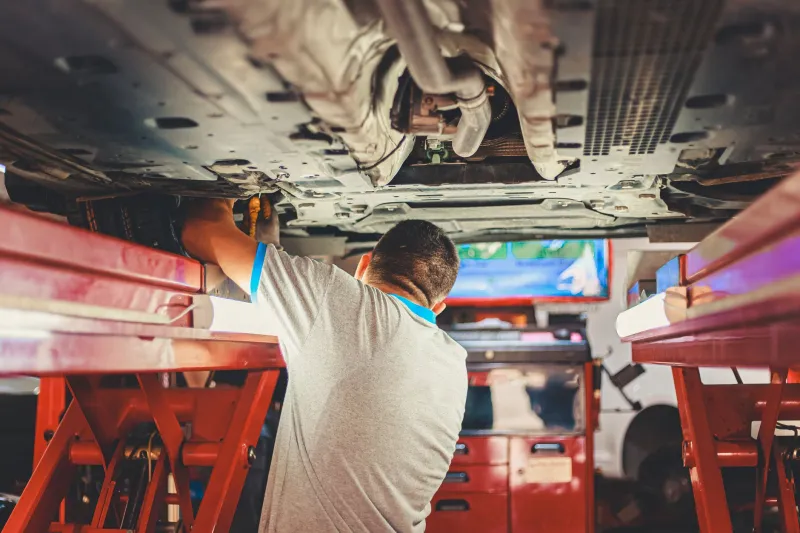
The most actionable thing you can take away from this is simple: get under the vehicle and look, or have someone do it for you. Not metaphorically — literally get a flashlight and look at the underside of your car, or ask your shop to do a visual inspection next time it's on a lift.
At AB Auto TN, we see a steady stream of vehicles where the owner had no idea there was a rust issue developing until it was already affecting a critical component. The fix at that point is never cheap. But caught early? Usually very manageable.
Tennessee roads aren't going to get easier on your vehicle. The combination of deicer chemicals, humidity, clay soil, and freeze-thaw cycles creates real corrosion risk even if we're never going to rival Cleveland for rust damage. The drivers who stay ahead of it are the ones who treat undercarriage health like any other maintenance item — something you check on regularly, not something you wait to notice.
Don't let the bottom of your car become an expensive surprise.