The Rust You Can't See Is the Rust That'll Cost You Everything
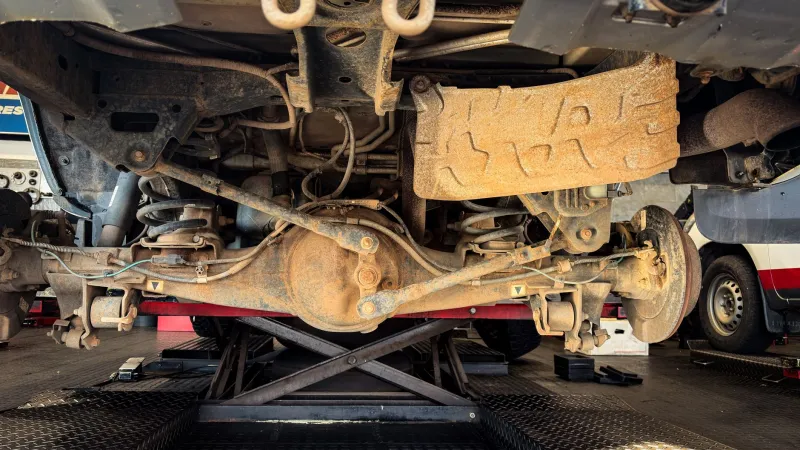
Most Tennessee drivers think rust is a Northern problem. Something that happens to cars in Minnesota or Michigan where roads get buried in snow and salt for five months straight. Down here, the thinking goes, we don't have it that bad.
That thinking is costing people thousands of dollars.
Tennessee has its own corrosion problem — and in some ways it's sneakier than what drivers up north deal with. It doesn't announce itself with heavy snowfall. It creeps in quietly through a combination of year-round humidity, surprise winter storms that send salt trucks scrambling, and rainfall patterns that keep the underside of your vehicle perpetually damp. By the time most owners notice something's wrong, the damage is already deep.
Let's talk about what's actually happening under your car — and what you can do about it.
Why Tennessee's Climate Is Surprisingly Brutal on Metal
Humidity is the part most people overlook. The state regularly sees relative humidity levels above 70 percent for much of the year, and that moisture doesn't just make summers feel miserable — it accelerates oxidation on exposed metal surfaces. Rust isn't just about water contact. It's about sustained moisture exposure over time, and Tennessee delivers that in spades.
Then there's the rain. The state averages anywhere from 50 to 60 inches of rainfall annually depending on the region, which means your undercarriage rarely gets a chance to fully dry out between drives. Water collects in frame seams, around suspension components, and inside hollow structural sections where it just sits.
And yes, there's road salt too. Tennessee winters are unpredictable — we might go two weeks without a freeze, then get hit with an ice storm overnight. When that happens, TDOT and county road crews apply salt and brine aggressively. That salt then gets sprayed up into every crevice of your undercarriage, and unlike northern states where drivers expect this and often take precautions, many Tennessee drivers don't wash it off promptly because they're not thinking about it.
The result? A corrosion environment that's active most of the year, not just in winter.
What Frame Rust Actually Looks Like — Before It Gets Catastrophic
The tricky thing about frame and undercarriage rust is that it's almost entirely hidden from view during normal daily use. You're not going to spot it glancing at your car in the driveway. Here's what to pay attention to:
Surface rust on visible components. If you can see rust on your wheel wells, exhaust hangers, or the edges of your door frames, that's your warning that the less visible areas are likely worse. Surface rust you can see is almost always a sign of deeper rust you can't.
Flaking or bubbling paint near the rocker panels. The rocker panels — the metal strips running along the bottom of your vehicle between the wheel wells — are prime rust territory. Paint bubbling in that area means moisture has gotten underneath and oxidation is already underway.
A musty or metallic smell inside the cabin. This sounds odd, but advanced frame rust can create small gaps or perforations that allow odors and even exhaust fumes to seep into the passenger compartment. If your car smells off and you can't trace it to something obvious, get underneath it.
Handling that feels loose or imprecise. Severe frame corrosion compromises structural integrity. If your car feels like it's flexing or responding sluggishly to steering inputs in ways it didn't before, that's a red flag worth taking seriously.
Visible pitting or scaling under the car. If you crouch down and shine a flashlight along the frame rails and cross members, healthy metal should look relatively uniform. Pitting, flaking scale, or orange discoloration that goes beyond surface-level means the corrosion has penetrated.
Which Vehicles Are Most at Risk
Not all cars are equally vulnerable, and it's worth knowing where your vehicle stands.
Older trucks and SUVs with body-on-frame construction — your F-150s, Silverados, Tacomas, and similar rigs — tend to accumulate rust in the frame rails and around the cab mounts. These are structural areas, and rust here isn't just cosmetic. It's a safety issue.
Vehicles with lots of seams and hollow sections give moisture more places to hide and pool. Budget and economy vehicles sometimes use thinner gauge steel that corrodes faster. And any vehicle that spent time in a northern state before coming to Tennessee may already have a head start on rust, even if it looks fine on the surface.
Higher-mileage vehicles that haven't had consistent undercarriage maintenance are obviously at higher risk, but even relatively newer cars can develop rust problems in Tennessee's climate if they're not being looked after.
Prevention Strategies That Actually Work in Tennessee
A basic car wash isn't going to cut it. Here's what actually makes a difference:
Get a professional undercarriage inspection at least once a year. This isn't something most quick-lube spots do thoroughly. You want a shop where someone actually gets the car up on a lift and walks the frame with a flashlight and a pick. Catching rust early — when it's still surface-level — is the difference between a $200 fix and a $2,000 one.
Wash the undercarriage after winter weather events. Any time Tennessee roads get salted, make it a habit to run through a car wash with an undercarriage spray within a day or two. The longer that salt sits, the more damage it does.
Consider a professional rust inhibitor coating. Products like rubberized undercoating or oil-based rust inhibitors (such as fluid film applications) create a barrier between the metal and moisture. These aren't permanent, but annual application makes a real difference in corrosion rates. Ask your shop what they recommend for Tennessee conditions specifically.
Address small rust spots before they spread. If your inspection turns up minor surface rust, treating it immediately with a rust converter and touch-up primer is far cheaper than letting it spread into the frame structure. Small problems have a way of becoming expensive ones fast.
Park strategically when you can. Parking in a garage or covered area reduces the cumulative moisture exposure your vehicle deals with over time. It sounds simple, but it adds up over years of ownership.
Don't Wait Until You See It
The frustrating thing about frame and undercarriage rust is that visible damage usually means the problem has already been developing for a while. By the time you notice something wrong, you've likely already lost some of the easier intervention windows.
The smarter play is to be proactive — especially if you're driving a truck, an older vehicle, or anything that's seen a few Tennessee winters without much attention paid to the underside.
At AB Auto TN, we do full undercarriage inspections as part of our service process, and we're always straight with customers about what we find and what it means for their vehicle long-term. Tennessee's climate isn't going to get less humid or stop throwing surprise ice storms at us. But with the right maintenance habits, you can stay well ahead of the rust problem before it turns into a rust crisis.
Don't let the damage happen in silence. Get underneath your car — or let us do it for you.